People as Bridges: Holding Steady in Sunshine and Storms
We must remind ourselves to fortify our efforts by confronting the difficult conversations, and choose to sit with our differences in an effort to better understand them, rather than hastily sweep them under the rug of creative camaraderie.
A critical reflection on Meeting Point 2025, by Manojna Yeluri, Artistik License
It’s easy to think of networks as essential for economic and intellectual empowerment, yet the relationships we nurture serve a deeper, more nourishing purpose too. They not only allow us to explore and exchange our ideas with others, but also help us find our own identity and locate ourselves in the larger creative world. Bridge building then, is essential for a healthy and thriving creative ecosystem; one where ideas, resources and people move freely.
Nearly all conversations at the Mekong Cultural Hub’s 2025 edition of its annual gathering on art and social action, Meeting Point, embodied this value of connection and exchange. Structured around the central theme of “Building Bridges”, Meeting Point 2025 in Vientiane, Laos, brought together individual artists, curators, researchers, and partners from grassroots and institutional organizations, working with both traditional and contemporary forms of creative expression across Asia. Across three days, we shared our skills, resources and experiences, of working with various aspects of the creative and cultural ecosystem, with particular focus on forging meaningful connections and nurturing them into trusted relationships that could stretch and grow beyond the gathering itself.
Making hay while the sun shines
For independent and grassroots practitioners, especially those engaging with art and advocacy, opportunities to gather with ease do not come easy. These chances are often fraught with obstacles ranging from long travel, tight budgets, overwhelming personal and professional commitments and clashing schedules. Which is why, when we do have a moment in the sun, we come together and try to make the most of it. In many ways, Meeting Point 2025 offered us this moment in the sun – a safe space to gather, play and explore, in an otherwise challenging year marked by global political upheaval, rising financial precarity and increasing injustice. It gave many of us a much-needed excuse to pause, reflect, celebrate and commiserate.
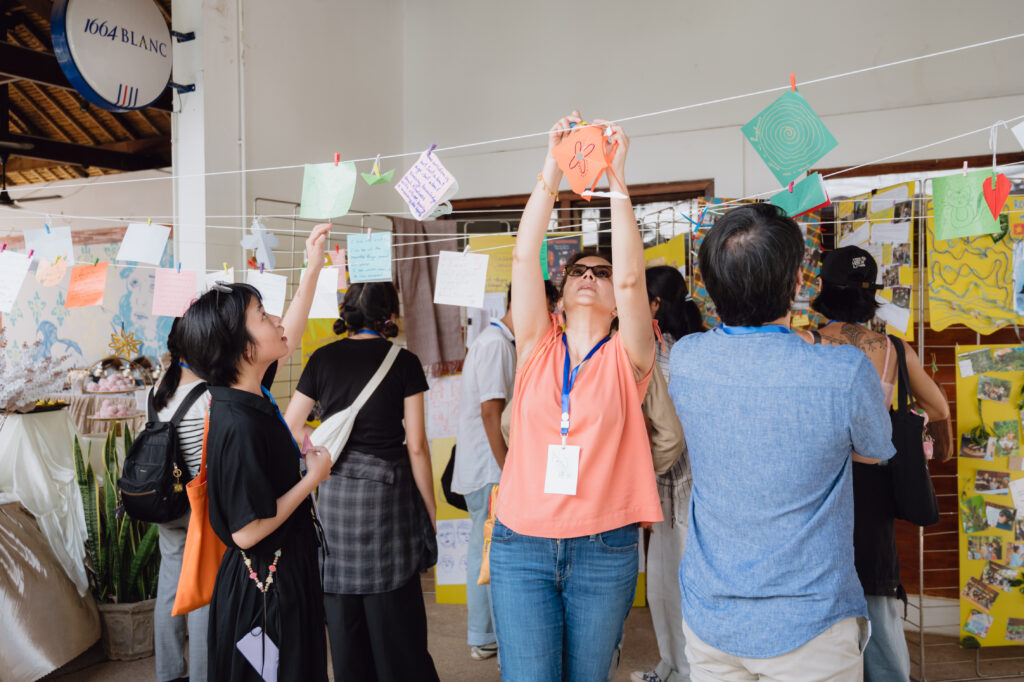
Although the central theme of Meeting Point 2025 may have been around the notion of bridge building and deepening external connections, it could also be said that much of the programming quietly encouraged introspection around our role and needs as individuals, both in community and policy-making. Thoughtfully curated sessions encouraged dialogue and exchange on critical issues such as climate change and Indigenous cultural traditions, using diverse mediums of creative expression including pottery, weaving, and kite-making. My own experience with one of two curated conferences at Meeting Point – on Economic Empowerment through Creative Work curated by Sasiwimon Wongjarin (Aom) – was an honest journey into evaluating my business and role as an entrepreneur in a rapidly diversifying creative economy.
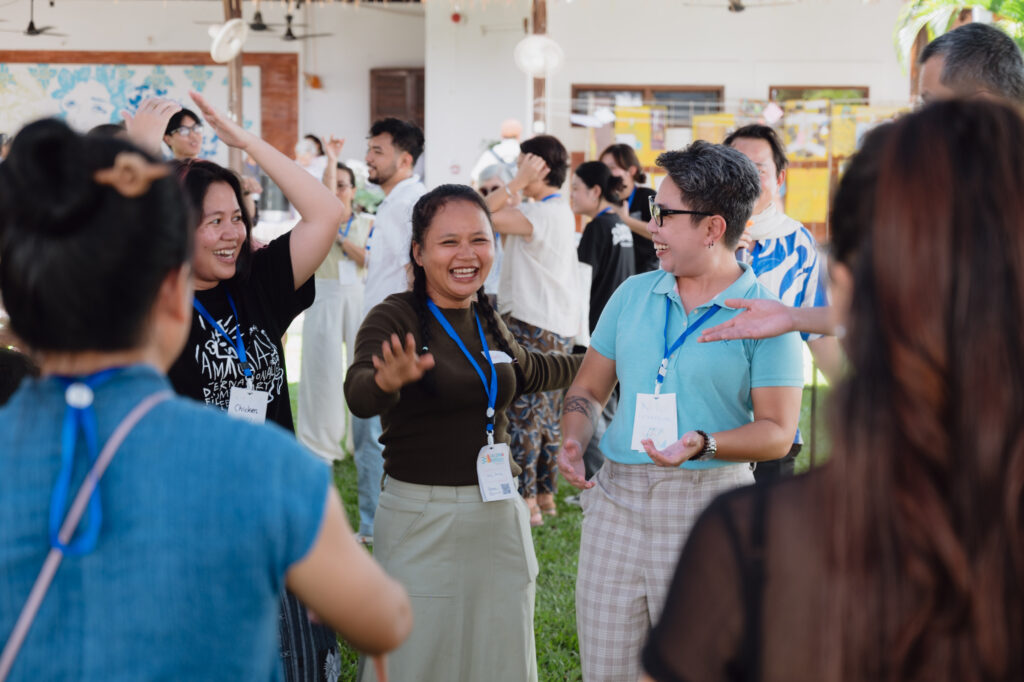
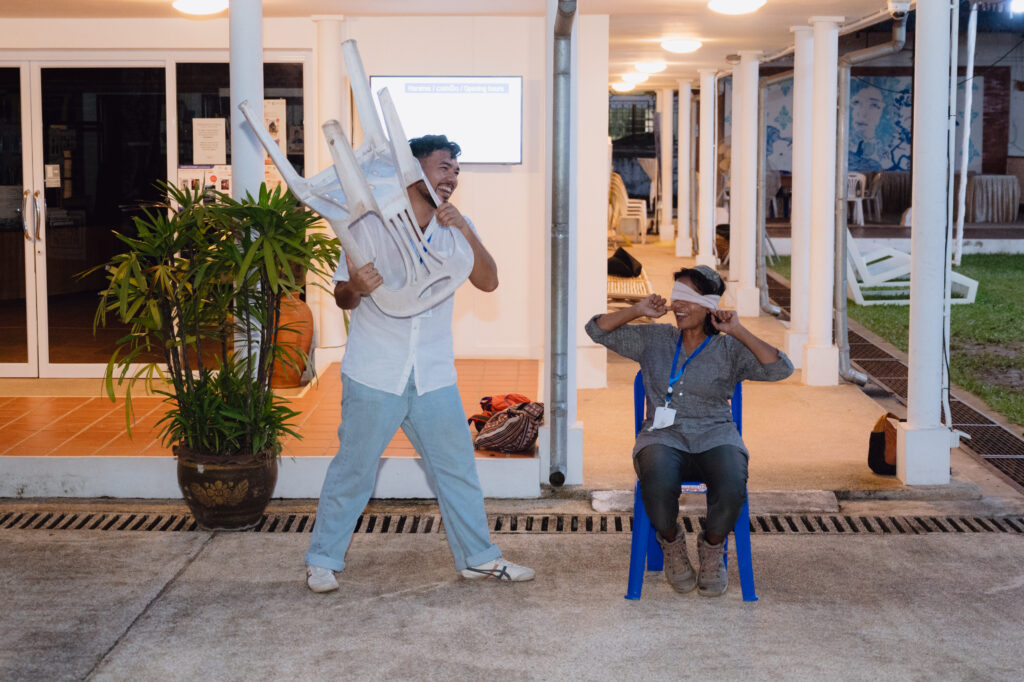
Curiosity-led programming, such as immersive and creative group exercises which culminated from several months of discussions and 10-days co-creation between six artists, served as a gentle yet powerful catalyst, pulling us out of our comfort zones and helping us reframe our perceptions of ourselves, our stories, and our bodies through acts of joy, play and movement – something many of us struggle to hold onto, especially while working as arts practitioners.
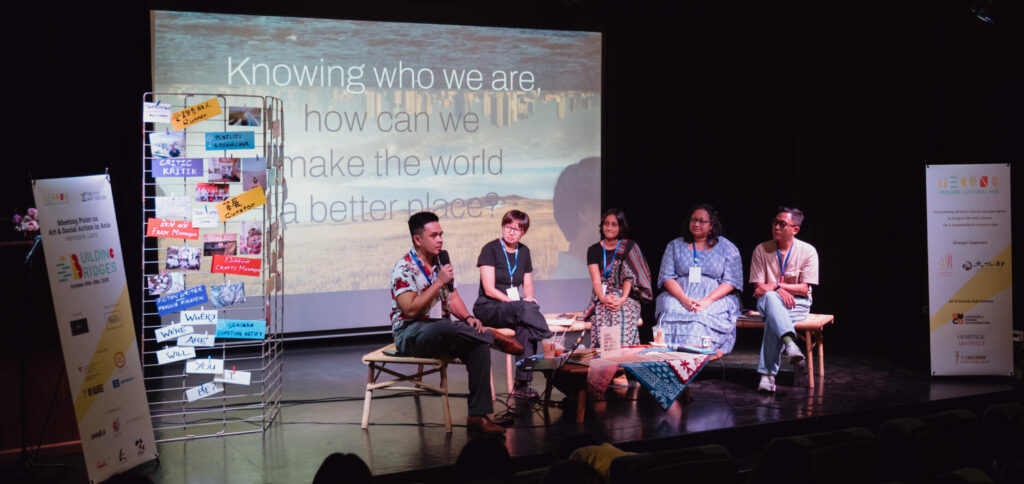
Identity exploration – an undercurrent of Meeting Point 2025 – found itself front and center in the insights shared by the fellows of the other curated conference, aptly titled Citizens of In-Betweens. Curated by Andrei Venal, the members of this cohort spent the months leading up to Meeting Point deepening their understanding of their identities as creative practitioners, while reflecting on their unique experiences as multi-hyphenate creators navigating the complexities of their rich intergenerational, multicultural, and ethnically diverse personal stories. Touching on struggles such as the need to be understood, to belong, and to be respected, rather than shamed for holding multiple identities, the presentations from this curated conference struck a chord with many of us, leading us to reclaim this shared feeling of vulnerability as a source of pride, rather than a shortcoming.
Building and Being
The act of building bridges is rooted in the belief that connections between distant points can enable the exchange of ideas and resources that benefit the people on either side. A good bridge, then, is one that eases isolation and fosters connection. But what ultimately makes a bridge enduring is its ability to bear weight; to withstand the pressure of passage and the wear of the environment it inhabits. In the past few years, international cultural relations have increasingly (and noticeably) become synonymous with a favourable form of soft power and diplomacy. This has led to seeing cultural exchange and creative networks, as subtle yet powerful tools of political action and social advocacy. It’s a lens increasingly adopted by institutional partners within the creative ecosystem, particularly those that identify as grant-making bodies, donors, funders, and investors in artistic practice and industry.
Against this background, the bridges we build can take many forms of cultural exchange and advocacy; strategic institutional partnerships, international co-productions, collaborative research projects, regional campaigns, and artist residency programs, to name a few. But what about the people involved? In our preoccupation with bridging gaps between experiences and contexts, are we giving enough thought to the responsibilities and burdens of being bridges ourselves?
Weathering storms
As meaningful a session as it was, the Citizens of In-Betweens curated conference stood out to me for another, more profound reason. During their presentation, the fellows shared a brief yet memorable visual bearing the words “People as Bridges” – a phrase that would go on to inspire the title of this piece. In the days following Meeting Point, the phrase lingered with me, prompting deeper reflection on what it means to be an arts practitioner engaged in cultural exchange within an increasingly polarized world.
In our rush to build bridges, are we forgetting that we are bridges ourselves?
An exploration of cultural collaboration, interconnectedness and identity would be incomplete without taking into consideration their darker shadows of conflict, inequities and censorship. As mentioned earlier, the infrequency of opportunities to gather among art and social justice practitioners, often leads us to avoid difficult conversations – conversations around subjects such as differing cultural and political values, alongside our quiet codependence on funding and resources from the global north/global minority and our strained relationships with local and national governments. I don’t blame us – we are in fact a very tired lot, and after spending so much of our waking hours and energy on constant problem-solving and emotional management, gatherings such as Meeting Point are some of the only few spaces that offer us respite. However, not being able to critically and collaboratively think about the burdens of cultural exchange, does not lessen the challenges – it only postpones them.
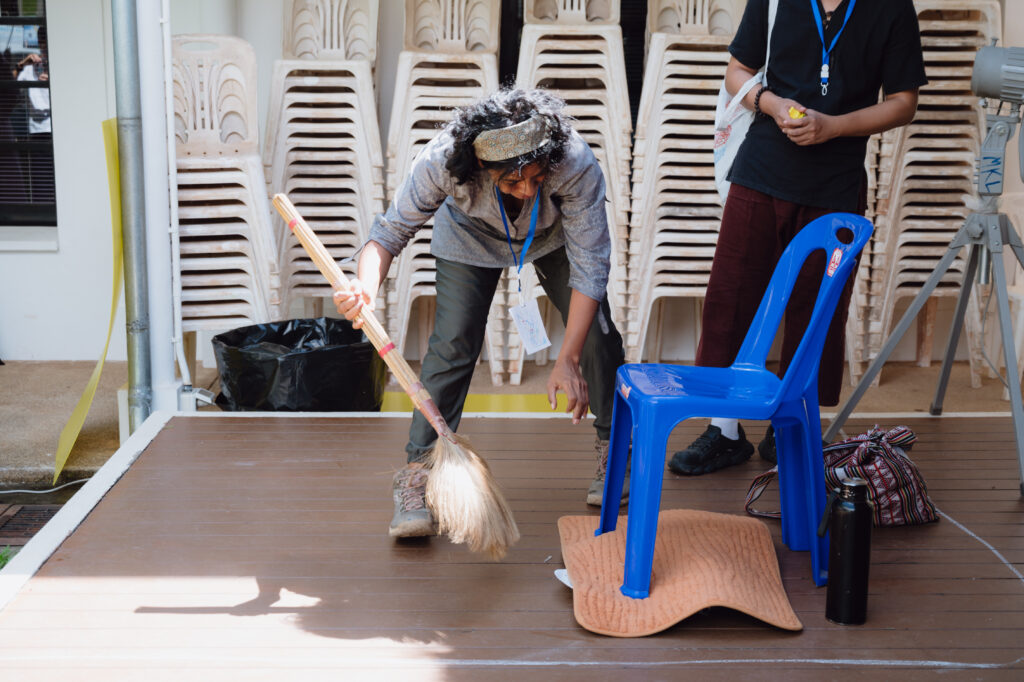
People are bridges. In fact, we might be the very thing that makes or breaks the bridges, pathways (and feel free to insert other suitable metaphors) that we are painstakingly trying to build. Jaimala Iyer (Jaya)’s session on “Navigating our Differences”, and her short intervention prior to her session where she was ostensibly “sweeping” our trash “under the rug”, in full view of us all, brought attention to the need for creating room to have conversations about the conflicts we face, particularly those that come with the burden of often representing entire communities, countries and ecosystems, whenever we show up as curators, producers, resident artists, researchers, facilitators and more. How do we critically engage, and constructively manage situations of racism, casteism, discrimination and harassment, without the fear of seeming undesirable, difficult or worse – unprofessional?
If we are bridges, then we cannot think only of holding steady in pleasant times; we must also learn how to weather the storms. Building and being a bridge, is as much about forging connections, as it is about standing firm during periods of scarcity, crisis and conflict. Unfortunately, this burden is not one that is often discussed or shared. It finds some degree of articulation during discussions that centre the challenges faced by practitioners at the grassroots level, or when given the opportunity to have open dialogue with policy and funding bodies. But otherwise, these conversations, if any, are reduced to hushed complaints shared amongst trusted friends and colleagues, but rarely becoming the focus of trainings, panels and keynotes.
Conclusion
In an ever changing world, marked by rapidly evolving technologies, alongside widening socio-political, economic and cultural gaps, we will always be hungry for connection and visibility. Perhaps this is why, as creative and cultural practitioners, we find deep resonance with the idea of building bridges – the urge to find a sense of belonging, and to communicate the universality of the human experience, is embedded in our work as curators and creators. But as we continue to nurture these connections and partnerships, we must remind ourselves to fortify our efforts by confronting the difficult conversations, and choose to sit with our differences in an effort to better understand them, rather than hastily sweep them under the rug of creative camaraderie.
Bridges must be fortified and made resilient, if they are to serve their purpose in all weather.
And if we, as people, accept our role as creative and cultural bridges; then we must also accept that there are burdens to be borne in this role as well.
Author: Manojna Yeluri, Artistik License
Photos: Participants enjoy the Creative Action, using song, movement and creative reflection to forge new forms of connection; Citizens of In-Betweens (Andrei Venal, Bella Zheng, Shweta Rao, Sharmilla Ganesan, Pujo Nugroho) share reflections with the Meeting Point audience; Jaya ignores conflict and sweeps debris under the rug. All credits JPEG Productions.
EXPLORE MEETING POINT 2025
Please click HERE for the full Meeting Point program, which included talks, workshops and cultural activities across the 3 days. You can also browse the links below.