ASH Mobility Program 2025
ASH Network mobility program is a collaborative initiative between Mekong Cultural Hub (MCH) and the hub partner organizations to foster a stronger network and professional development for arts practitioners within our focus region. While MCH provides the financial support, the design and implementation are led in partnership with local Hub Partners to ensure the program meets the specific needs of their communities. We kicked off the discussion for designing the program with the facilitation of Marie Le Sourd from On The Move during our partners meeting in Hanoi in 2024. The resulting Pilot Program was implemented during 2025.
Mobility Program Overview
With the key objectives of Strengthen the Network, Mutual Learning, Resource Sharing, and Career Advancement; the Mobility Program supported arts and cultural practitioners whose work is at the intersection of art and society through two dimensions:
A. Travel Grants
- Purpose: Allows for the movement of artists and cultural workers from each partner’s country to participate in art and cultural activities of other communities within the Mekong Region & Taiwan
- Impact: Creates new opportunities for cross-cultural experiences and professional development.
B. Local Events Funding
- Purpose: Affords Hub Partners the ability to activate a variety of local activities that support awareness and connection with the wider region.
- Activities: Talks, events, and exchanges with visiting artists and cultural workers from other parts of Asia.
- Impact: Creates dynamic spaces for dialogues and learning about regional narratives.
2025 Results
Heritage Art Space
Vietnam’s long geography creates significant regional differences- the north, central and south each have distinct climates, cultures and access to art opportunities. Artists in the central region in particular have historically had fewer chances to travel abroad or access professional development.
With this context, Heritage Art Space decided to keep their mobility grants open and flexible, wanting to make support accessible for those in the centre and south, where resources and opportunities are scarcer. Their approach was to offer a large number of micro-grants, through an open call, hoping to reach more practitioners who might otherwise be overlooked.
They managed to secure additional co-funding co-funding from Goethe Institut Hanoi, which meant they were able to award a total of 11 grants across a broad range of disciplines, including visual art, design, architecture, photography, theatre and film. The projects funded were varied, covering research, conferences, residencies and exhibitions. Grantees’ ages ranged from about 25 to 45 years old, fitting the target of emerging to mid‑career practitioners.
One of the shared interests of the Hub Partners in the ASH Network is migration. The relevance of this interest was reflected in the interests of the grantees HAS supported. For example, Nguyễn Thị Thanh Mai used her grant to visit the Vietnamese migrant community living on Tonlé Sap Lake in Cambodia. Similarly, A Sông Collective from Da Nang explored the histories of Vietnamese migrants who moved to Laos and Cambodia at different times. Reflecting on these projects, HAS’ Director, Tuan, reflected his view that we can “think about mobility across generations, not just physically moving people, but also connecting stories from the past to inform future movement and collaboration.”
Trees Music and Art
Like HAS, Trees wanted to direct their support to artists who have fewer opportunities, and to consider histories of migration within SEA and Taiwan. They chose a curated approach to awarding their grants, under the theme “Mekong Borders.” They aimed to examine the histories, memories, and stories of the Mekong River Basin and reimagine the cultural map of the region. The two Mobility Grants they made, went to:
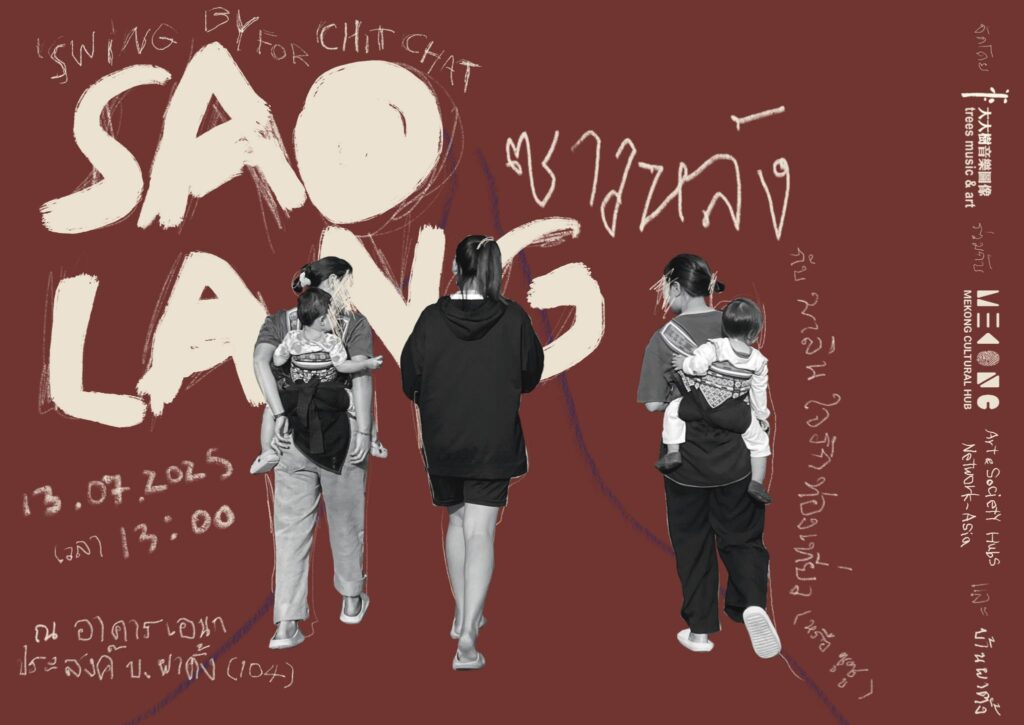
Malin: Her project, Family Migration History, gathered women’s oral histories along migration routes in the Golden Triangle (Thai–Myanmar–Lao borders). She used embroidery as a medium to document women’s labour and life stories particularly among the local Yao ethnic community, whose voices are often unheard.
Jun: Her project explores border narratives and everyday soundscapes in Yunnan villages in northern Thailand near the Myanmar border. She collects oral histories and ambient sounds from women in the region, moving beyond the usual Kuomintang-centric accounts. This work is being developed into a documentary film, with plans for a screening once completed.
By focusing on underrepresented stories and using a theme-based selection, the program sets itself apart from standard mobility grants and supports projects that connect deeply with communities. Throughout the process, Trees also gave continuous mentoring to the grantees.
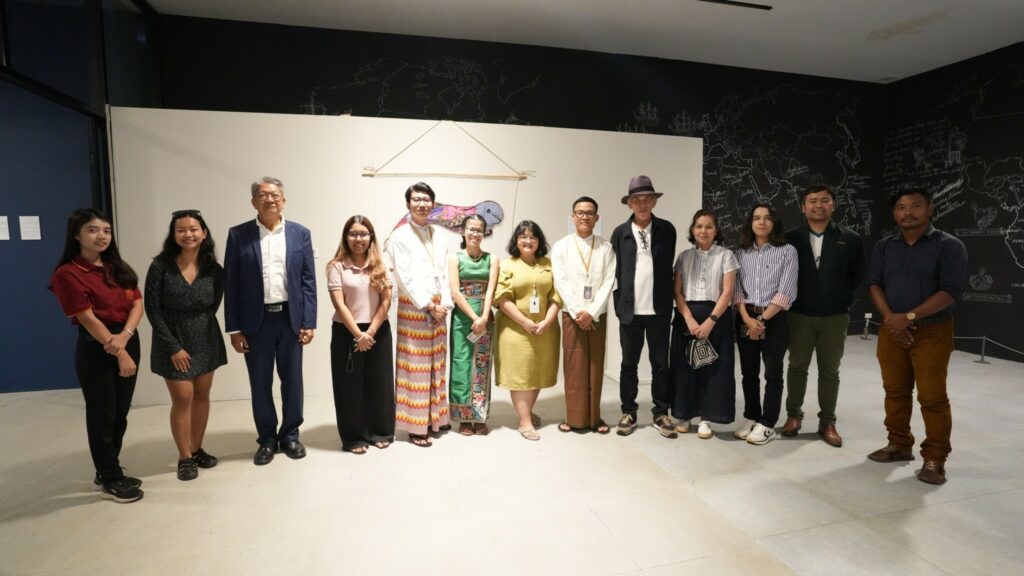
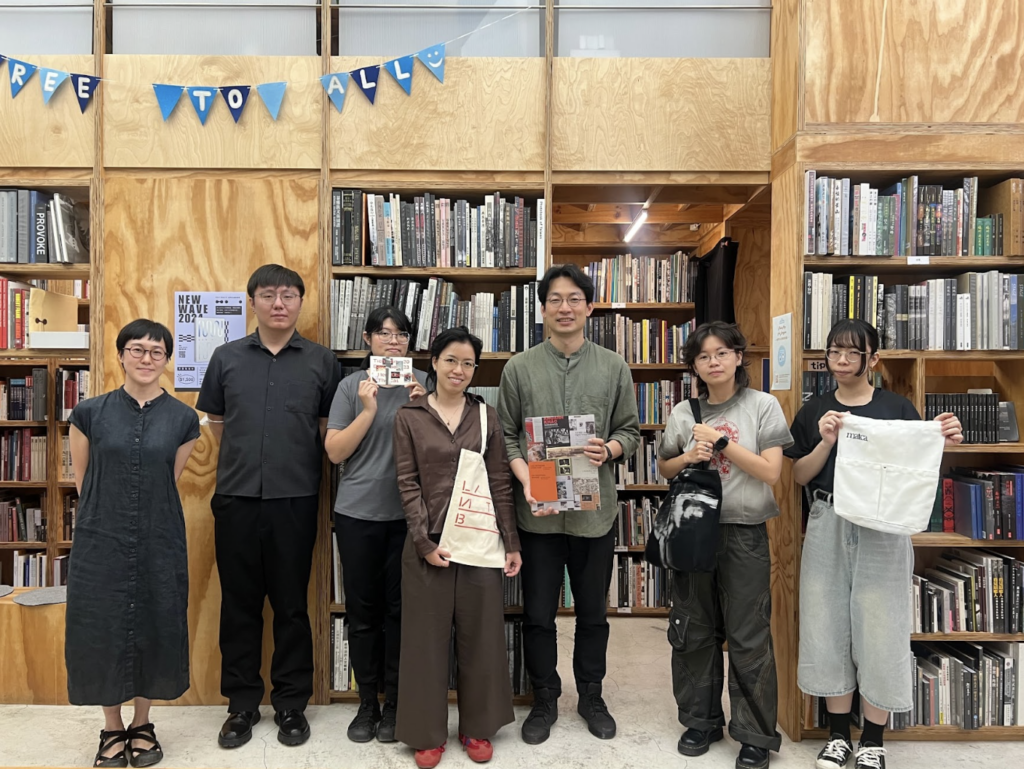
With Trees support, the two grantees conducted several public events in Thailand and in Taiwan, in community spaces and in collaboration with universities, where they shared the stories with a wider network of interested audiences.
AMCA
One significant decision AMCA made was to ensure the program was open to applicants both within Myanmar and among displaced artists living in Mekong countries, reflecting the need to support exiled creatives. They also worked on a principle of equity over equality providing differing levels of support based on individual circumstances. For example, when the Myanmar earthquake caused delays in moving forward with arrangements for two of the grantees; AMCA chose to allocate extra funds to cover urgent travel and visa costs for these two artists they had already committed to support, even though it meant reducing the overall number of grants they could make.
Another contextual challenge for AMCA to navigate was distributing funds given Myanmar’s volatile currency and banking restrictions; the solution was cash distribution via trusted networks to ensure recipients received the full grant amount.
AMCA supported grants to five individuals from diverse disciplines- multidisciplinary artist, indie filmmaker, visual artist, archivist, and writer-researcher and the impact varied for each recipient. The multidisciplinary artist explored co-working spaces in Chiang Mai and Bangkok with an eye to recreating a version in Myanmar. The filmmaker attended the Blue Chair Film Festival in Luang Prabang and gained inspiration for her next project. The visual artist and archivist completed a two-month fellowship at the Songkhla Arts Center in southern Thailand, producing works focused on the ecological issues of Songkhla Lake with input from local communities. The writer-researcher visited schools and libraries in Taiwan to present children’s literature and collaborate with local writers.
In the end, these inspiring cases demonstrate how flexible, locally informed funding can empower grassroots arts communities despite difficult conditions.