Call for Workshops: Asian Perspectives on Artistic Freedom
Safe Havens Meeting, December 2nd- 4th 2026
In December 2026, Living Arts International (Mekong Cultural Hub and Cambodian Living Arts) is partnering with SH|FT and RADAR to organise the annual Safe Havens Meeting, which will take place in Siem Reap, Cambodia.
The theme for this year’s meeting is SEA Differently: An Asian Lens on Artistic Freedom. Our goal is to create space to expand the global conversation about what we mean when we talk about artistic freedom, particularly in the context of Asia. We hope to foreground the experiences of arts and cultural practitioners who may not position themselves on the front lines of political opposition, but whose artistic freedom is nonetheless hampered for a myriad of reasons.
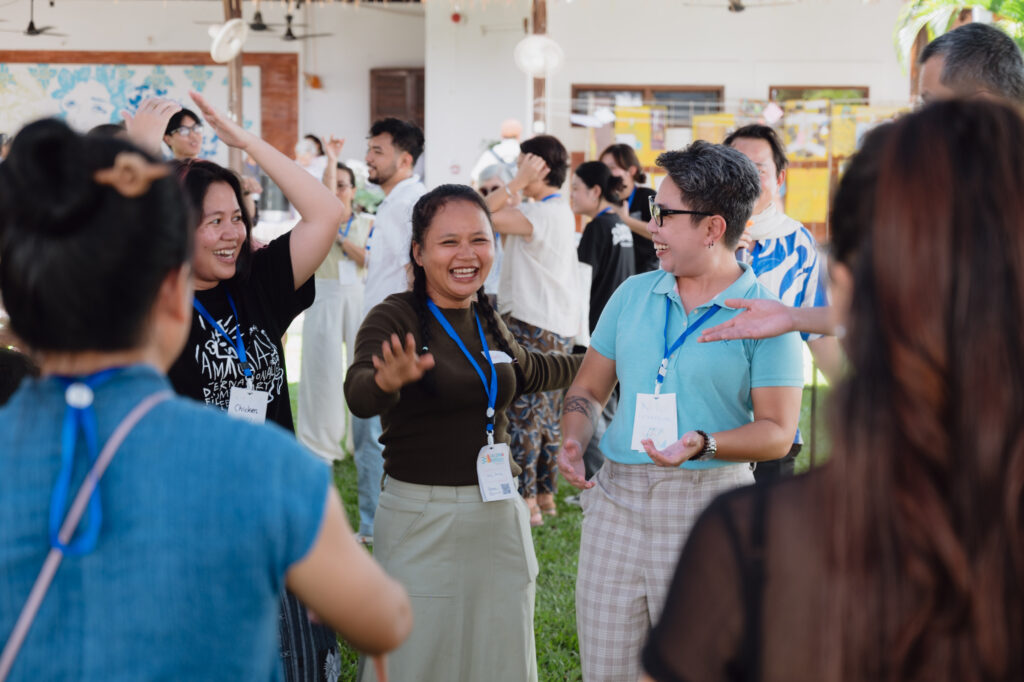
The meeting will gather at least 120 individuals, including artists, arts managers, researchers, funders and policymakers from across Asia and internationally, with a program that will span three days, featuring talks, workshops, exhibition and performances. Topics on the agenda will include The Cambodia We Want, Reimagining Relocation, and With Whom Are We Building? We plan to focus on what can be done, and how those resources that exist might be deployed in new ways to build up expression and creativity, rather than dealing with crises.
Open call essentials!
Seeking: Proposals for 90-minute interactive workshops related to artistic freedom in Asia
Application deadline: June 1st 2026
Eligibility: Southeast, South and East Asian citizens resident in Asia (at least 3 of 6 awards will be for Southeast Asia)
Q&A Session: May 13th, 5pm Bangkok time
Click on the links for full details of:
Open call for workshop proposals
To ensure the Safe Havens Meeting 2026 foregrounds the experiences, concerns and priorities of practitioners in Asia, we are now calling for proposals from cultural and social practitioners (including but not limited to artists, managers, researchers, cultural rights defenders) based in Southeast, South and East Asia to run workshops during the Meeting that relate to our theme SEA Differently: An Asian Lens on Artistic Freedom.
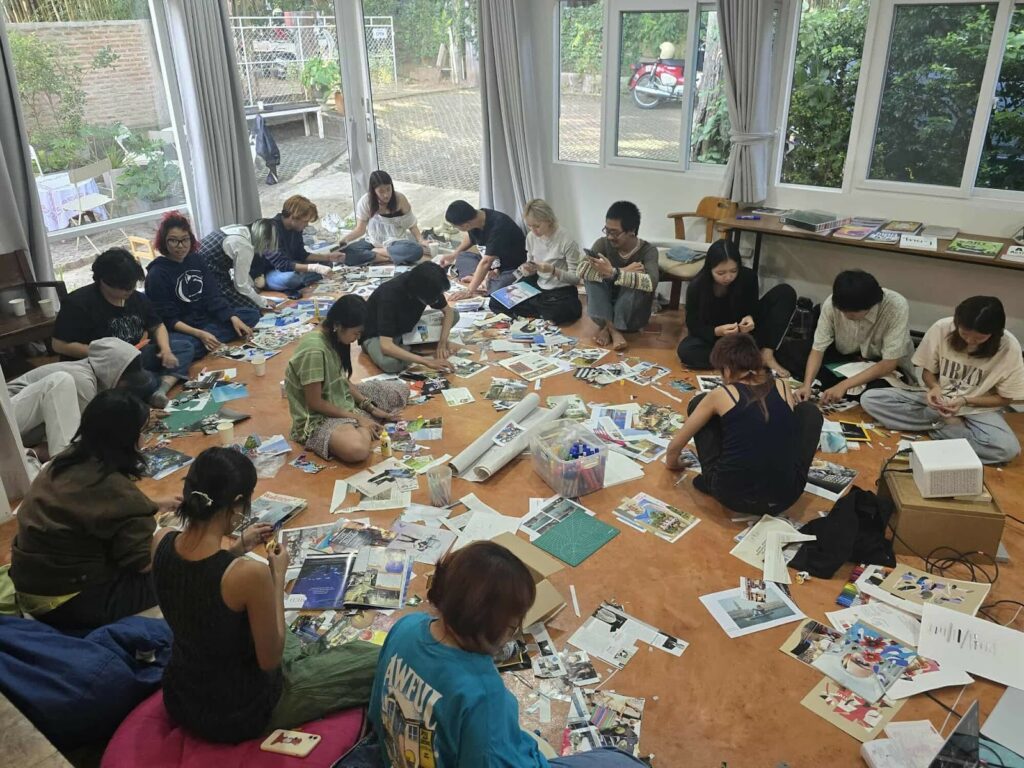
In total we will select six workshops, with at least three being proposals from practitioners in Southeast Asia. The workshops proposed can be on any topic or in any format, as long as they are connected to the main meeting theme, 90 minutes long, interactive in nature, and suitable to run with a group of approximately 30 participants.
The selected proposals will be awarded:
- A $300 USD unrestricted micro-grant to cover any expenses associated with the workshop
- Support for a maximum of two workshop facilitators to attend the full Safe Havens Meeting from December 2nd -4th 2026
The workshop facilitators will also be required to participate in 3 online exchanges with the other workshops hosts. These exchanges will be facilitated by Som Sila, with support from MCH Program Manager, Zun Ei Phyu.
This open call is not only an opportunity to raise the profile of your work and your concerns with a global community of practitioners from the arts and civil society who are interested in artistic freedom, but also a chance to grow your networks with peers and allies within Asia.
Please check the links above to access more information about the open call. On May 13th we held an open Q&A session which 30 people attended – the questions and answers are published below. If you have further questions please contact safehavens@mekongculturalhub.org. Proposals are due by June 1st 2026. We are looking forward to hearing from you!
Meet the Program Coordinator
Questions & Answers about the open call
Who will the workshop participants be?
The participants will be the other delegates of the Safe Havens Meeting. Therefore they will be a mix of cultural practitioners (including artists, managers, producers/ curators and so on), NGO and INGO staff, researchers, funders and possibly civil servants. Many people will be coming from Asia, mainly Southeast and South Asia, as well as people coming more internationally e.g. from the USA and Europe, plus we expect a few participants from Africa and Central America.
Based on this, you should expect a diverse group of participants 🙂
The workshops will be offered as parallel sessions, meaning that the participants will have elected to attend that specific session, so you can assume some common interest/ level of engagement with your topic.
Can we know the nationalities and backgrounds of participants in advance?
Yes. The meeting uses a platform called Swapcard where participants register with bios and countries and other information about themselves. As the workshops will be parallel sessions with limited spaces, participants have to register in advance for which session they want to attend, so you will be able to see who has registered for your workshop. Swapcard also enables us to upload information e.g. reading or links, or to communicate with participants if you want to send out some questions.
The open call says electricity is available but no technical equipment like lights or sound systems. Does that mean we can use PowerPoint but not show a video?
You can show a video, but the setup will not be cinema or gallery grade. You can use a laptop to present, and small Bluetooth speakers may be available for sound. The Safe Havens Workshop Coordinator, Som, and MCH Program Manager, Zun Ei, will make sure it’s totally clear what tech needs we can support (or not) before you come to Siem Reap.
Can we use graphics like posters, charts, and whiteboards?
Posters and charts should be absolutely fine. Right now we don’t know if we will already have whiteboards available at the venue, but as part of the pre-process before the Safe Havens Meeting the Safe Havens Workshop Coordinator, Som, and MCH Program Manager, Zun Ei, will make sure it’s totally clear what material needs we can support (or not) before you come to Siem Reap. You can also use the unrestricted micro-grant to purchase additional materials you may want or need.
Can I share the profile of a co-facilitator in the application or only myself as the lead applicant?
Absolutely. Please include information about both of your practices, experiences and interests in the topic and the Meeting. We have edited the application form to make it clearer that we want to hear about both of you.
Is it possible to engage a co-host after the proposal is selected?
Yes, it is possible, but they should be confirmed by the end of July. They will be expected to fully participate in the networking and exchange sessions and attend the whole Safe Havens Meeting. They also need to meet the eligibility criteria per the Program Overview.
Can I engage a co-host just for the workshop itself, not joining the whole Safe Havens Meeting and pre-program networking and exchange? For example, bringing in a local artisan as part of the 90 min session.
We expect both the host and the co-host to join the whole program, including the online networking sessions and the full Safe Havens Meeting.
You could consider using your micro-grant to hire a local artist or artisan to contribute something to the workshop, but even in this case we would encourage you to consider whether it would be more meaningful and what would be needed to enable their full participation in the full Safe Havens Meeting.
We don’t consider the workshops as a standalone event, but rather as one of several modes of mutual exchange between the regional and global community of peers and potential partners joining the Safe Havens Meeting.
Can a pair apply if the lead is a Southeast, South or East Asian citizen and resident, but the partner is a different nationality?
Yes, that scenario is fine. The lead applicant must be a citizen and resident of Southeast, South or East Asia; the co-facilitator can be another nationality but should be resident in the region. Please refer to the Program Overview for more detail on eligibility.
Can a Southeast Asian artist who is currently in exile in Europe or another continent apply?
This call is specifically for Asian practitioners resident in Asia. There will be artists with lived experience of exile contributing in other parts of the program.
Is facilitating consent-based interaction between participants as part of the workshop suitable?
Yes. Multiple directions of interaction (not just between the facilitators and the participants) are very welcome; it’s the reason we are calling for workshops rather than presentations or panels. And yes please to consent-based everything at all times!
Does the workshop have to have a specific focus on Southeast Asia?
No, the purpose of these workshops is to foreground practitioner perspectives on artistic freedom. The content is not expected to be “about” a geography/ place. As long as the topic of the workshop is relevant to the theme “SEA Differently: An Asian Lens on Artistic Freedom” it will be eligible. It might be something connected to a specific issue, a personal experience, a case study, a response, an unanswered question…. We are looking forward to learning the diversity of ways that people interpret the theme, which already will offer insights into perspectives on artistic freedom within the region.
Can I use the workshop to share my own artistic practice, or should workshops focus on a broad, thematic topic?
The purpose of these workshops is to foreground practitioner perspectives on artistic freedom, so if sharing your artistic practice will achieve that objective then yes it would be fine to do so as part of the workshop. All workshops need to relate to the theme “SEA Differently: An Asian Lens on Artistic Freedom” so please bear this in mind. And please remember that the participants will be the other delegates of the Safe Havens Meeting.
How much should I adapt my “local flavor” for an international audience?
It’s great if your locality, context and culture is integral to the content and format of your workshop. Your design just needs to take into account that the participants will come from diverse countries and cultures across Asia and beyond. You can use the networking and exchange sessions with the other workshop facilitators and the Safe Havens/ MCH team to figure out if there are nuances that may benefit from interpretation for you to be able to get your message across or to achieve your objectives, and possible ways of doing this.
What if two workshops cover the same subject matter?
We are open to selecting two or more workshops on the same subject if they have different formats, takes, or perspectives.
What format works best based on past meetings?
The best format is the one that emerges from your interests, expertise and local context. Safe Havens is designed in such a way that mixed stakeholders in the artistic freedom ecosystem – artists, NGOs, and support systems—are speaking to each other directly, rather than about each other. We want people to express themselves in ways comfortable to their context, rather than feeling a need to talk in a certain way because it’s a conference or a formal space.
Can the outcome of the workshop be a collective performance or exhibition?
Yes, definitely (although bear in mind you only have 90 minutes!) We welcome creation and co-creation as a format/ methodology for the workshops.
Why was Siem Reap chosen for the meeting?
Following a discussion between SH|FT and ArtsEquator regarding the underrepresentation of certain regions of the world within global dialogues around artistic freedom, they decided it was important to address this gap and began to explore the possibility of organising Safe Havens in Southeast Asia. Based on our work with Meeting Point, they decided to approach Living Arts International as a partner. LAI’s head office is in Cambodia, and it’s a place where we have good networks and partnerships, including with CICADA, to ensure we can organise a good program for all the delegates. We chose Siem Reap rather than Phnom Penh because Safe Havens prefers to convene in peaceful, nature-oriented atmospheres to support fruitful, relaxed conversations.
Cambodia is also generally very accessible for visas, and has good tourist infrastructure to make sure everyone is comfortable and has a good experience.
What else will be happening at Safe Havens?
There will be three plenary sessions exploring The Cambodia We Want, With Whom do We Build – which will look at partnering beyond the arts and working differently to build a stronger ecosystem around artistic freedom – and Reimagining Relocation. There will also be workshops from resourcing organisations on topics like mobility, archiving, and artist safety, as well as info sessions from international and policy organisations so that cultural practitioners can get a sense of what is happening and what resources existing internationally. ArtsEquator will share research about Southeast Asia, and there will be a mapping workshop for a global database commissioned by SH|FT. There will also be performances and exhibitions, from artists in Cambodia and beyond. We will release more details of the program in the coming months.
Partners & Supporters
This program is possible thanks to support of organisations and individuals including: